Category Archives: Interviews
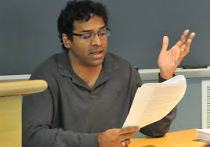
What Else Could It Be: Ekphrastics and Collaborations – interview with Ravi Shankar by Ann van Buren
Singaporean literature is localized and comes from four distinctive traditions; English language, Mandarin, Tamil, and Malay… Yes, well, Tamil is my mother tongue.
What Else Could It Be: Ekphrastics and Collaborations – interview with Ravi Shankar by Ann van Buren
Singaporean literature is localized and comes from four distinctive traditions; English language, Mandarin, Tamil, and Malay… Yes, well, Tamil is my mother tongue.
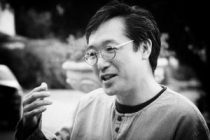
“I keep finding poetry outside its ordinary territories”: A Conversation with Japanese Poet Yasuhiro Yotsumoto
As a Japanese poet living in Germany, do you ever feel like an “outsider”…
“I keep finding poetry outside its ordinary territories”: A Conversation with Japanese Poet Yasuhiro Yotsumoto
As a Japanese poet living in Germany, do you ever feel like an “outsider”…
The Art of Collaboration in Translation
A very interesting interview with Mark Bender from CLT
The Art of Collaboration in Translation
A very interesting interview with Mark Bender from CLT
A conversation with Chinese poet Ming Di 明迪
about visual poetry, female identity, issues concerning migrant writers and translation, etc.
http://www.worldliteraturetoday.org/blog
A conversation with Chinese poet Ming Di 明迪
about visual poetry, female identity, issues concerning migrant writers and translation, etc.
http://www.worldliteraturetoday.org/blog

Interview with Francoise Roy
Françoise Roy was born in Saint-Hyacinthe, Quebec, Canada, in 1959. She has a Master’s degree in Geography with a Certificate in Latin American Studies (Bachelor of Science, University of Maryland, 1980 —Summa Cum Laude—; Master of Arts, University of Florida,
Interview with Francoise Roy
Françoise Roy was born in Saint-Hyacinthe, Quebec, Canada, in 1959. She has a Master’s degree in Geography with a Certificate in Latin American Studies (Bachelor of Science, University of Maryland, 1980 —Summa Cum Laude—; Master of Arts, University of Florida,

Damir Šodan on Croatian Poetry and its translation
Yugoslavian movies about World War II were very popular in China in the 1970s and 80s. Then your country went through an internal war and broke into several countries. I’ve always wondered how the turmoil has affected the contemporary poets. Where were you and what were you doing during the War time?
Damir Šodan: In those days, during the Homeland War (1991-1995) as we call it in Croatia, I was teaching English in the secondary school in Čazma, …
Damir Šodan on Croatian Poetry and its translation
Yugoslavian movies about World War II were very popular in China in the 1970s and 80s. Then your country went through an internal war and broke into several countries. I’ve always wondered how the turmoil has affected the contemporary poets. Where were you and what were you doing during the War time?
Damir Šodan: In those days, during the Homeland War (1991-1995) as we call it in Croatia, I was teaching English in the secondary school in Čazma, …

Gregor Podlogar on Tomaž Šalamun
The funeral was in Ljubljana on Monday, January 5, 2015. There were around 300 people, at least 80 poets, from all generations, and some from abroad. It was a nice sunny day again. Poet Miklavž Komelj and translator Michael Biggins gave speeches; by the grave, poet and one of Tomaž’s best friends Aleš Debeljak read a poem. …
Gregor Podlogar on Tomaž Šalamun
The funeral was in Ljubljana on Monday, January 5, 2015. There were around 300 people, at least 80 poets, from all generations, and some from abroad. It was a nice sunny day again. Poet Miklavž Komelj and translator Michael Biggins gave speeches; by the grave, poet and one of Tomaž’s best friends Aleš Debeljak read a poem. …
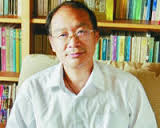
Interview with Zhang Shuguang
这30多年来中国诗歌界出现很多流派名称,批评家和汉学家很关注这些表面的东西,作为诗人,你如何看待“流派”?

Interview with Judy Halebsky on Japanese Poetry and Translation by Masashi Musha
originally published by Poetry International SDSU on PI-online, re-posting here with their permission
Interview with Judy Halebsky on Japanese Poetry and Translation by Masashi Musha
originally published by Poetry International SDSU on PI-online, re-posting here with their permission
 PoetryEastWest